
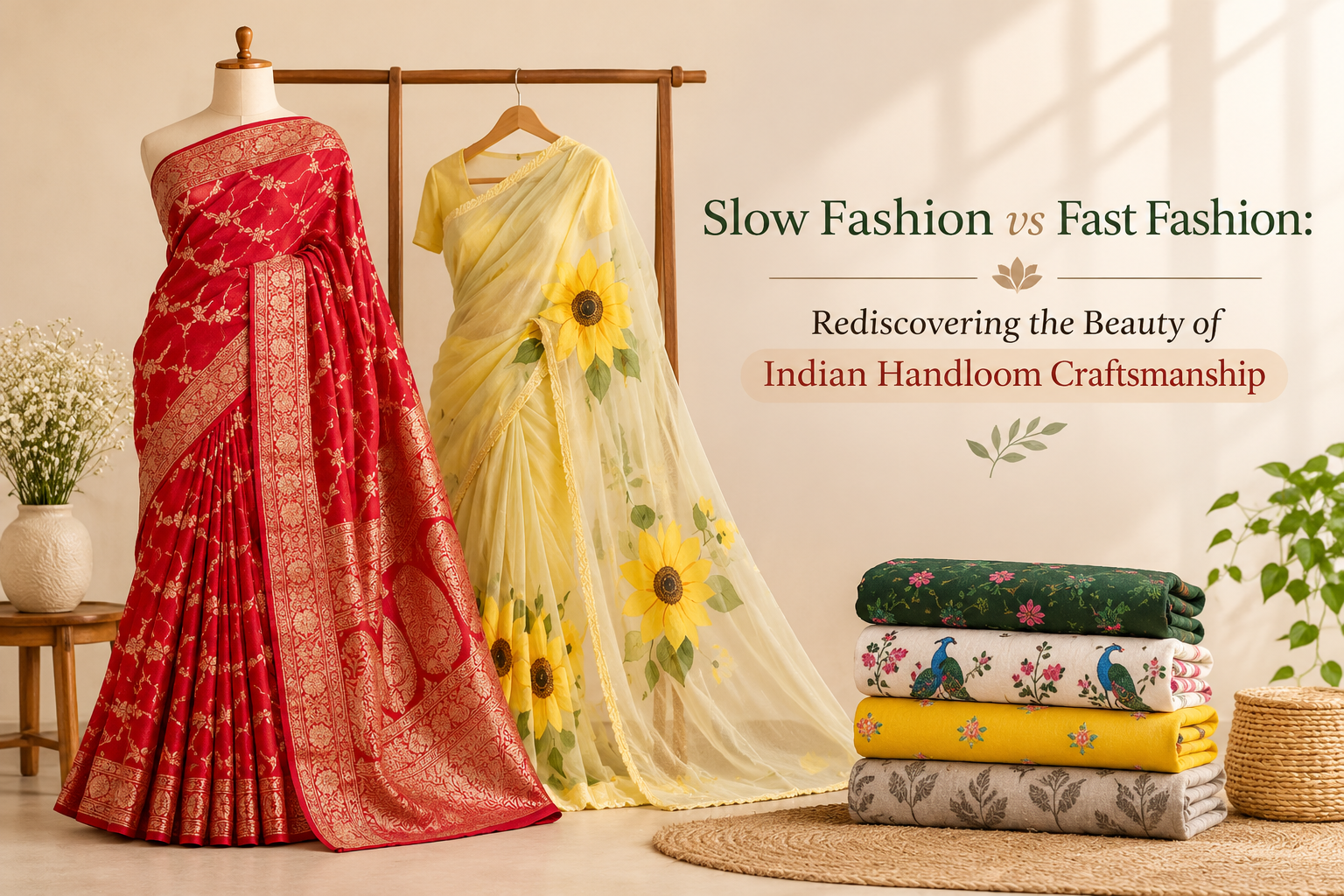
Slow Fashion vs Fast Fashion: Rediscovering the Beauty of Indian Handloom Craftsmanship
Open your wardrobe for a second. Somewhere in there is probably one piece you’ve had for years, it still holds its shape, its colour hasn’t faded, and it somehow still feels “yours.” Right next to it is probably something you bought on a whim, wore twice, and now it just sits there, a little stretched out, a little faded, waiting to be given away.
That difference isn’t really about design. It’s about how a piece of clothing was made, and why.
Fashion trends today move at an almost dizzying pace. New styles show up every week, and fast fashion makes it incredibly easy to chase them. Slow fashion asks you to slow down instead, to notice quality, to value a piece that will actually last, and to make choices that feel a little more responsible. This shift in how people think about their clothes has also brought new attention to Indian handloom products online and the rich, generations-old craftsmanship behind them.
So, what really separates slow fashion from fast fashion, and why are more people falling back in love with handmade fabric and traditional craftsmanship? Let’s get into it.
Fast Fashion vs Slow Fashion: What’s the Real Difference?
Fast fashion is built for speed. It’s designed to put the newest trend in your hands as quickly and cheaply as possible, which is exactly why it’s so easy to refresh your wardrobe every season. But that speed comes at a cost: when clothes are made to be replaced quickly, quality is often the first thing to go, and the result is a growing pile of discarded, barely-worn clothing.
Slow fashion takes the opposite approach. It’s less about keeping up and more about choosing well, prioritizing quality, durability, traditional techniques and responsible production over chasing whatever’s trending this week. Instead of buying something because everyone else is wearing it, slow fashion nudges you toward pieces you genuinely love and will actually keep.
The difference shows up in how things are made, too. Fast fashion leans on mass production, while slow fashion puts the spotlight back on craftsmanship, thoughtful fabric choices, and the actual people behind every piece.
It’s worth saying clearly: slow fashion isn’t only about handloom. It’s a much wider idea that includes durable, well-made clothing of any kind, fair wages and working conditions for the people who make it, natural dyes and gentler materials, buying less and repairing or reusing what you already own. Handloom is simply one of the clearest, most tangible examples of these values in action, which is why it keeps coming up in this conversation.
Why Indian Handloom Deserves a Closer Look
India’s handloom heritage didn’t happen overnight; it’s been shaped over generations. Travel from one region to another and you’ll find a completely different weaving technique, pattern, colour palette and design language, each one tied closely to local culture and identity.
What makes handloom so special is the human skill behind it, passed down from one generation of weavers to the next. Unlike anything churned out by a machine, handloom pieces carry small, unrepeatable details that make each one genuinely one of its own.
A few names you’ve probably come across:
- Banarasi weaves: known for their intricate patterns and traditional technique.
- Chanderi fabric: loved for its lightweight feel and understated elegance.
- Ikat: instantly recognisable by its distinctive dyed patterns.
- Khadi: tied to the tradition of hand-spinning and hand-weaving.
- Jamdani: admired for its intricate, decorative motifs.
These aren’t just materials stitched into clothes. Each one carries the creativity, patience and cultural memory of the artisans who made it.
A Craft That Goes Beyond Fashion
The appeal of Indian fabric doesn’t stop at clothing. From intricate embroidery to hand-painted designs, traditional techniques show up everywhere, in clothes, home décor, accessories and everyday lifestyle pieces.
Search for traditional Indian fabric online and you’ll find an entire world of designs, each one shaped by the art and culture of a specific region.
Madhubani-inspired patterns, for instance, carry the artistic voice of Bihar, while block printing celebrates the beauty of hand-carved wooden blocks pressed onto cloth, one motif at a time.
These techniques don’t just break the monotony of repetitive design. They bring India’s rich artistic legacy into objects you can actually use every day.
How Choosing Slow Fashion Supports Indian Artisans
One of the most meaningful parts of slow fashion is the direct line it draws back to local artisans and small, independent makers.
Traditional crafts demand time, patience and genuine skill. Every time someone chooses a handmade piece over a mass-produced one, they’re creating real demand for that craftsmanship to continue.
Choosing handloom and artisan-made pieces can help:
- Keep traditional weaving techniques alive
- Support independent artisans and small craft businesses
- Build appreciation for regional Indian art forms
- Reward craftsmanship over mass production
- Preserve cultural designs for the generations after us
This is exactly why Indian handloom holds such an important place in the growing conversation around sustainable fashion.
Buying Indian Handloom Online? Here’s What to Check
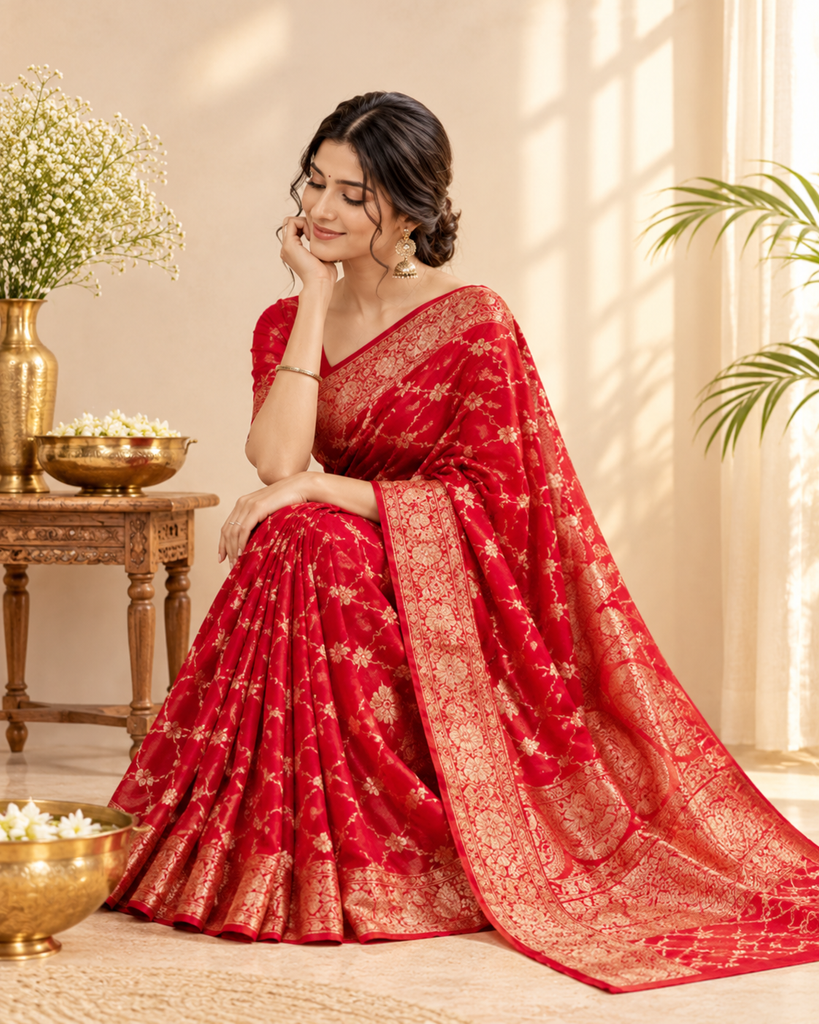
Shopping online has made Indian handloom far more accessible, no more hopping between markets just to compare patterns, fabrics and regional designs.
That said, before you buy Indian handloom products online, a few things are worth checking.
Check the fabric details: Know whether it’s cotton, silk, linen or a blend.
Look for craftsmanship details: The product description should tell you if it’s handwoven, hand-printed or machine-made.
Explore the design: Pick patterns and colours you genuinely like, not whatever’s trending this week.
Check product information: Look over dimensions, care instructions and the actual product photos before you order.
Appreciate the origin: Pieces inspired by regional Indian crafts are a window into the country’s artistic diversity.
A little extra care while choosing goes a long way toward finding something that suits you and actually honours the work behind it.
Making Space for Handloom in Everyday Life
Handloom isn’t stuck in the past or limited to traditional outfits anymore. Its colours, patterns and textures are finding their way into modern wardrobes and contemporary homes alike.
You can style handloom fabric into everyday outfits, festive wear, scarves and accessories. The same patterns work just as well on cushion covers, table runners, wall décor and other home accents.
This easy mix of traditional craftsmanship and modern taste is exactly what keeps Indian handloom relevant across so many different lifestyles.
Rather than saving these pieces for special occasions, there’s a lot to be said for simply weaving them into daily life.
Final Thoughts
The slow fashion vs fast fashion conversation isn’t really about picking a side. It’s about understanding the value of what you buy, and appreciating the effort that went into making it.
Slow fashion itself is a bigger idea than any one craft, but Indian handloom is a beautiful way to experience it firsthand. Its distinct patterns, regional roots and craftsmanship are a reminder that fashion can mean something more than just keeping up with trends.
Whether you’re browsing Indian handloom products online or looking for something traditional for your wardrobe or home, choosing thoughtfully helps you appreciate Indian craftsmanship for what it really is.
Sometimes, the most beautiful things aren’t the ones chasing the newest trend. They’re the ones carrying a story worth holding on to.
Frequently Asked Questions (FAQs)
1. What is the main difference between slow fashion and fast fashion?
Slow fashion focuses on quality, durability, thoughtful production and traditional craftsmanship. Fast fashion focuses on producing trendy clothing quickly and in large quantities.
2. Why are Indian handloom products special?
Indian handloom reflects regional weaving techniques, cultural patterns and skills passed down through generations, giving every piece its own distinct identity.
3. Where can I explore traditional Indian handloom online?
You can explore online handicraft stores that offer traditional Indian fabrics, handcrafted products and region-inspired designs. Always check fabric details and product descriptions before purchasing.
4. How does handloom support sustainable fashion?
Handloom supports more conscious consumption by encouraging appreciation for craftsmanship, local skills and cultural heritage. Its sustainability also depends on the materials, production methods and working conditions involved.
