|
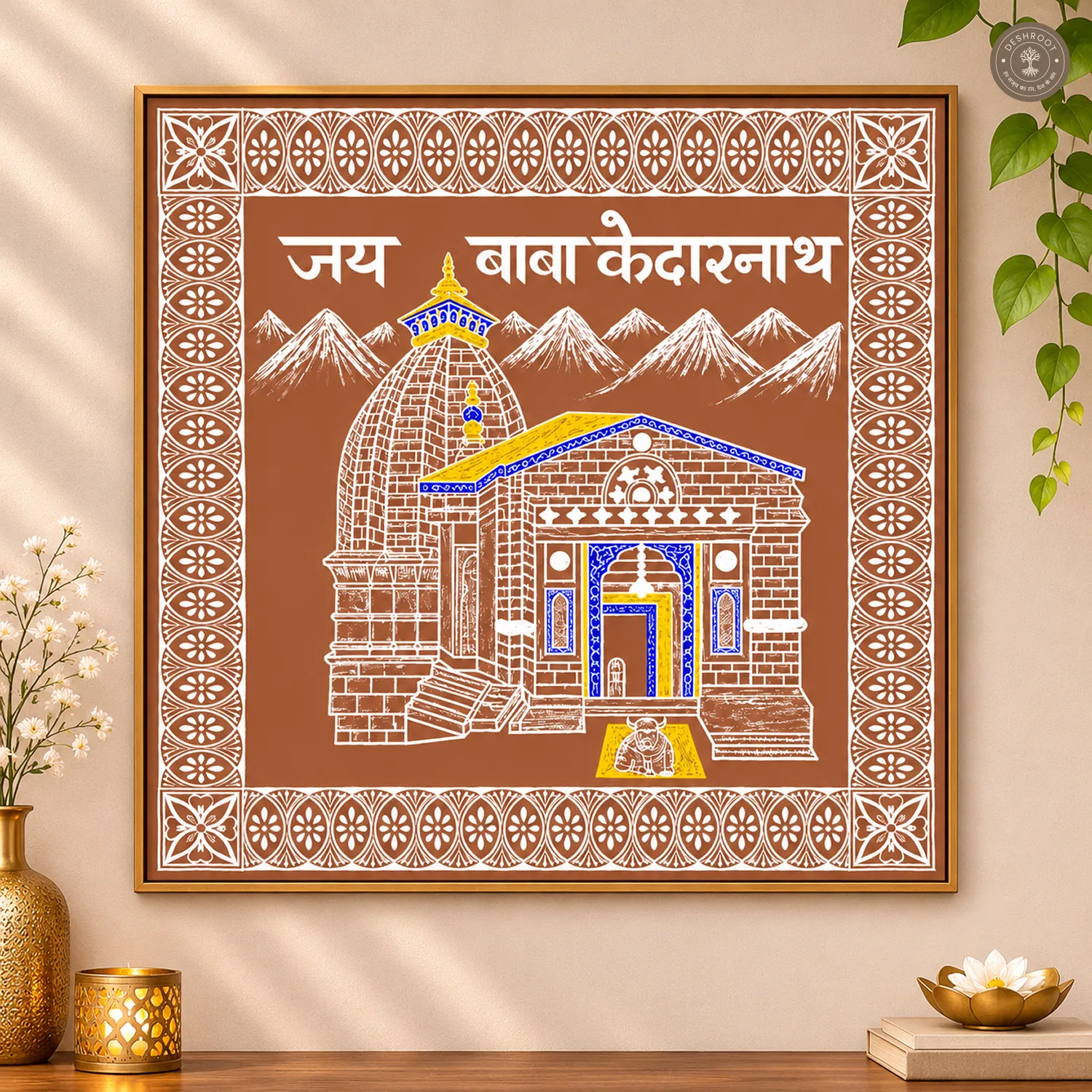
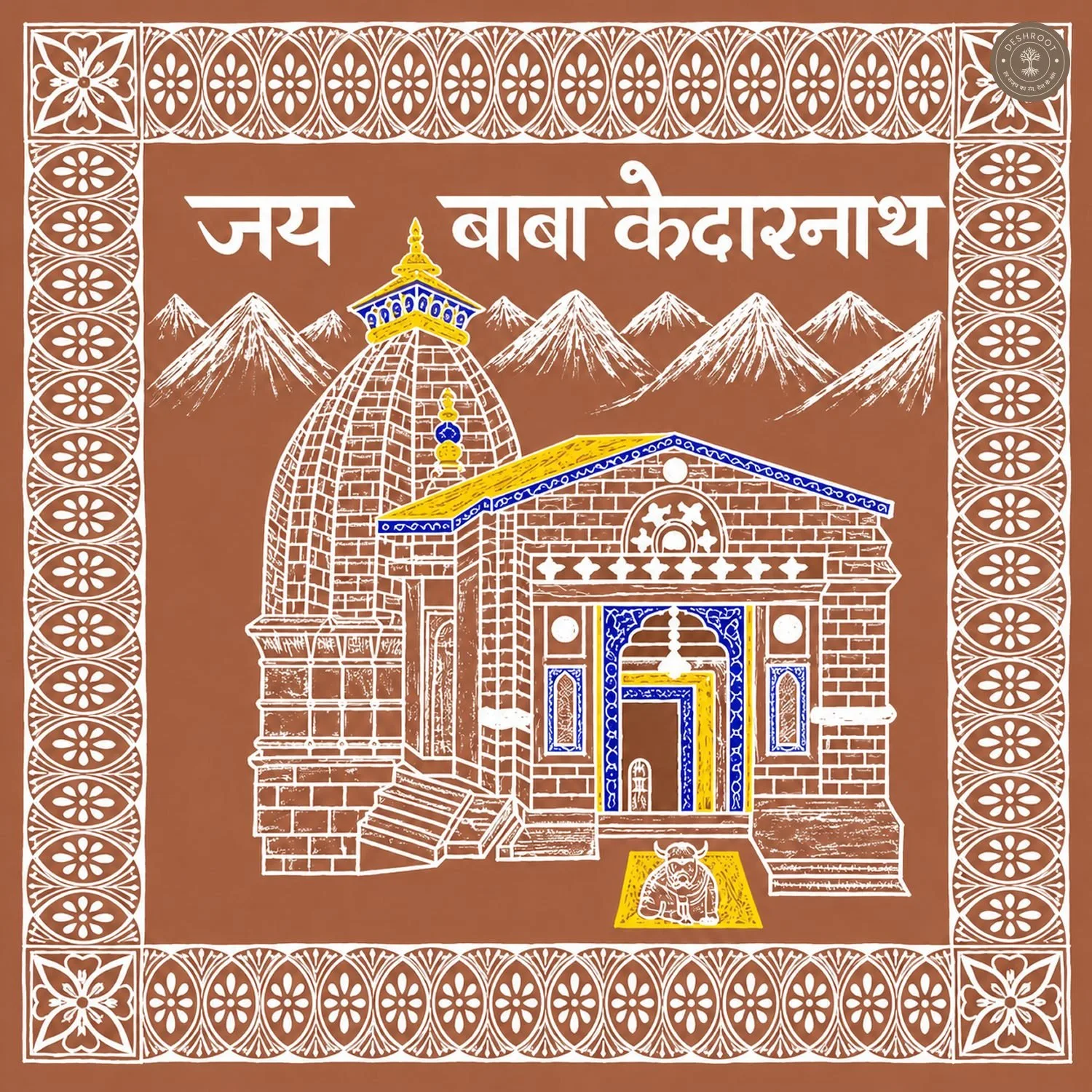
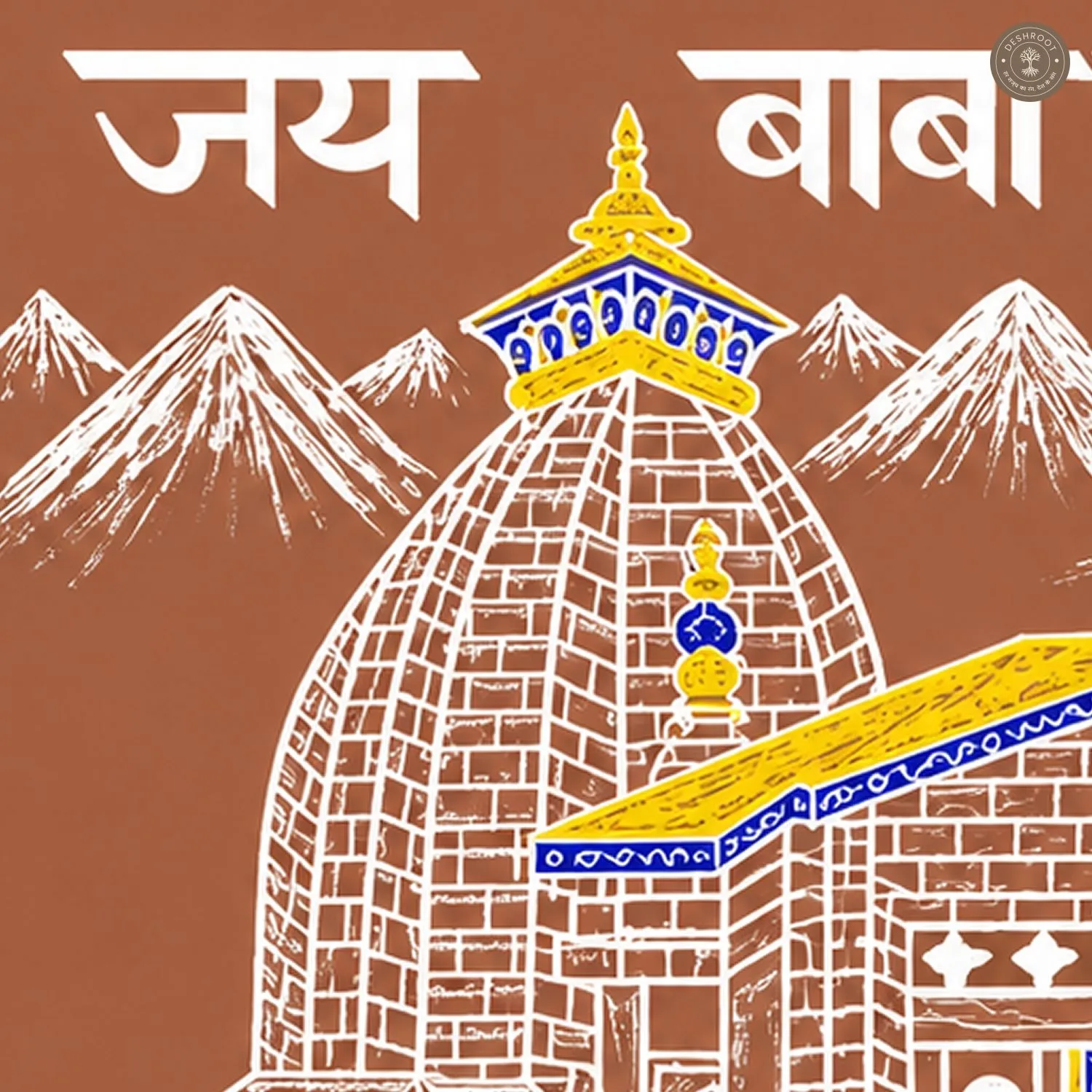
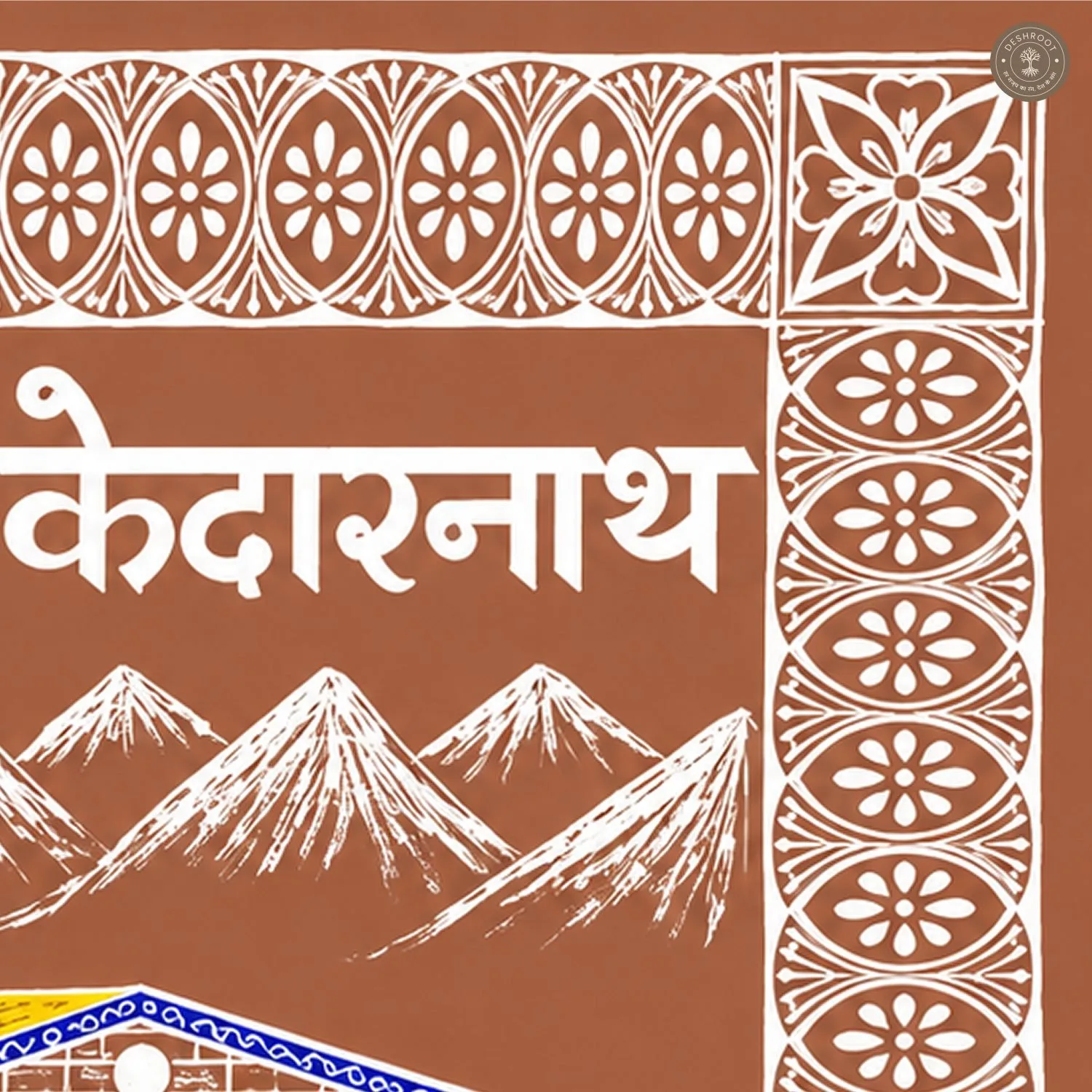
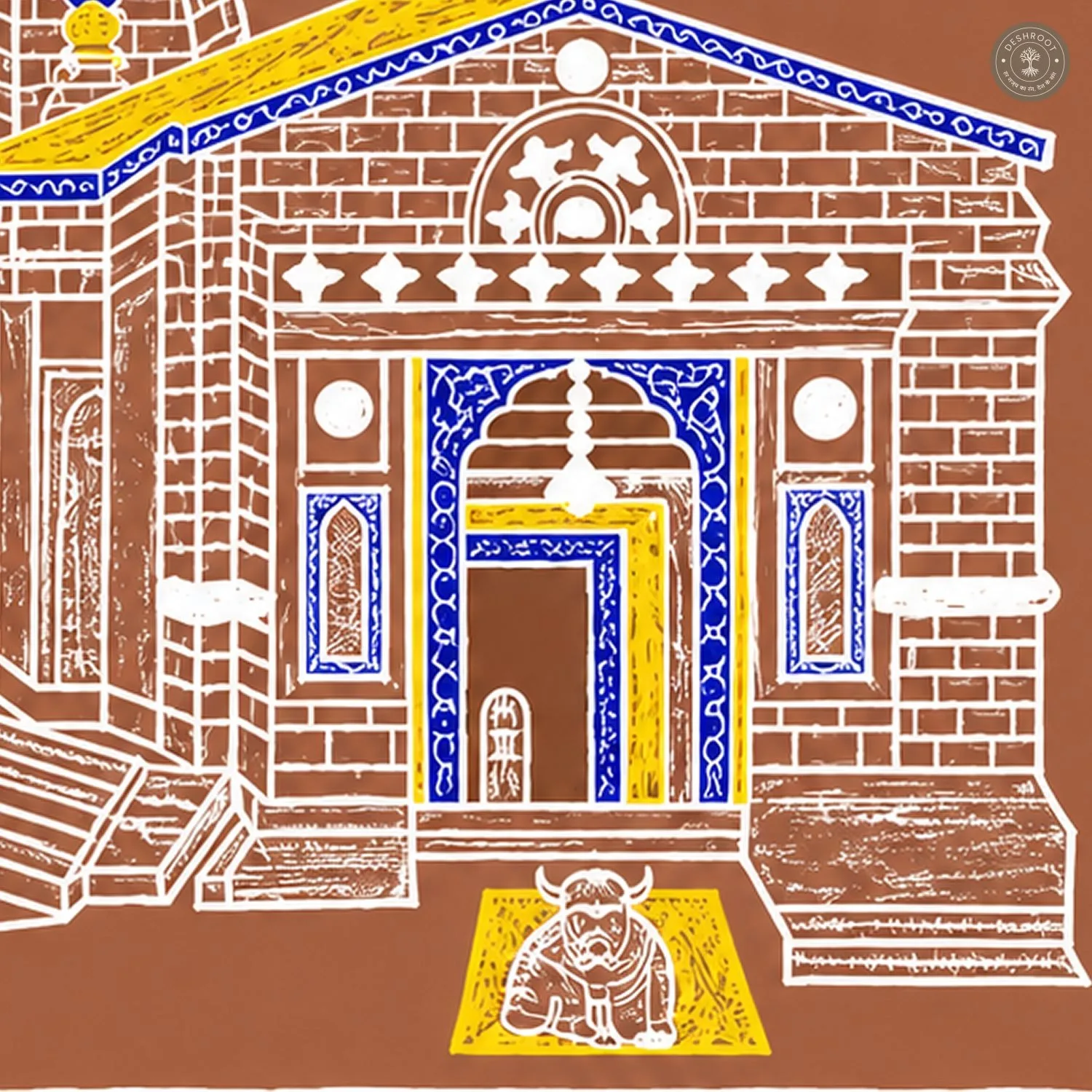
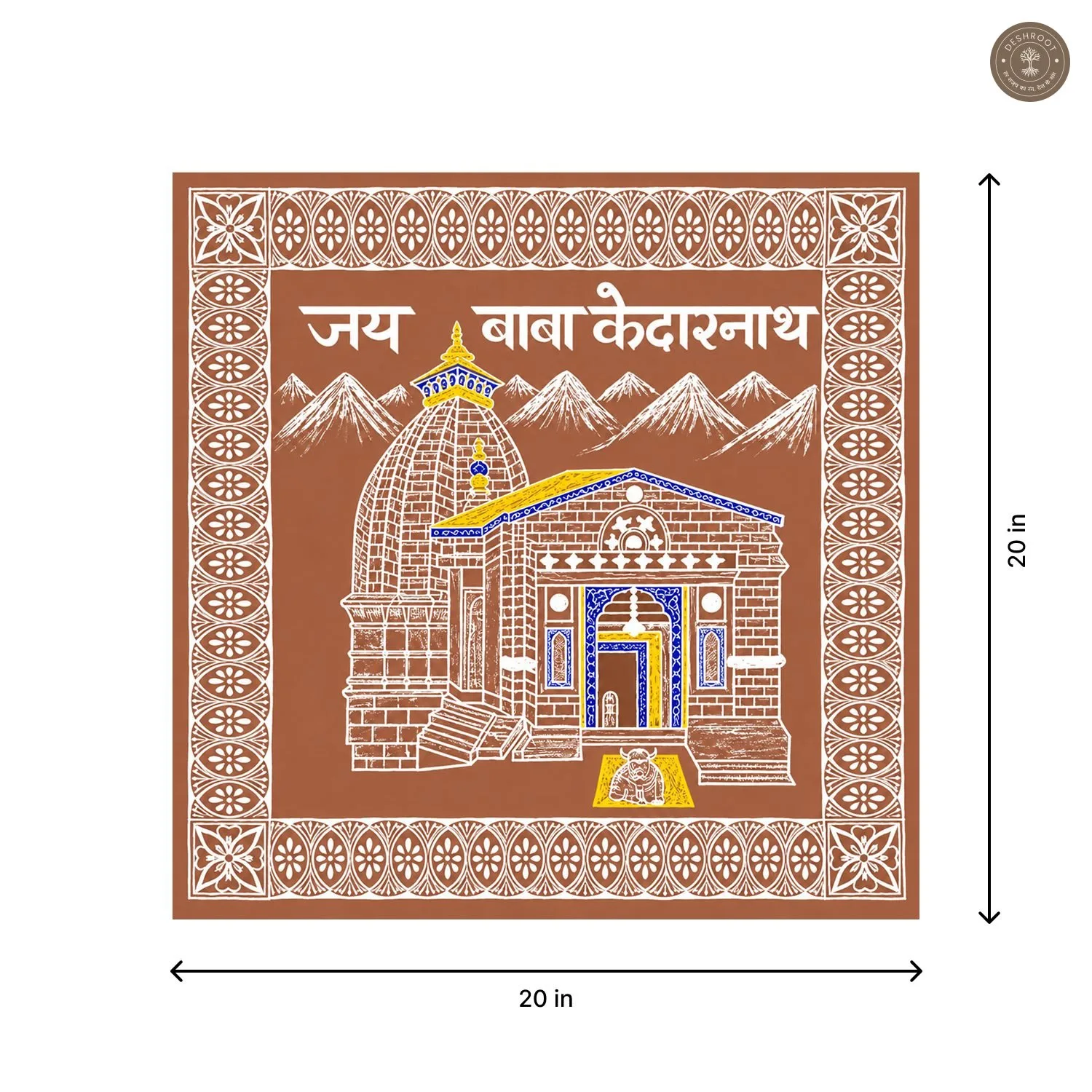
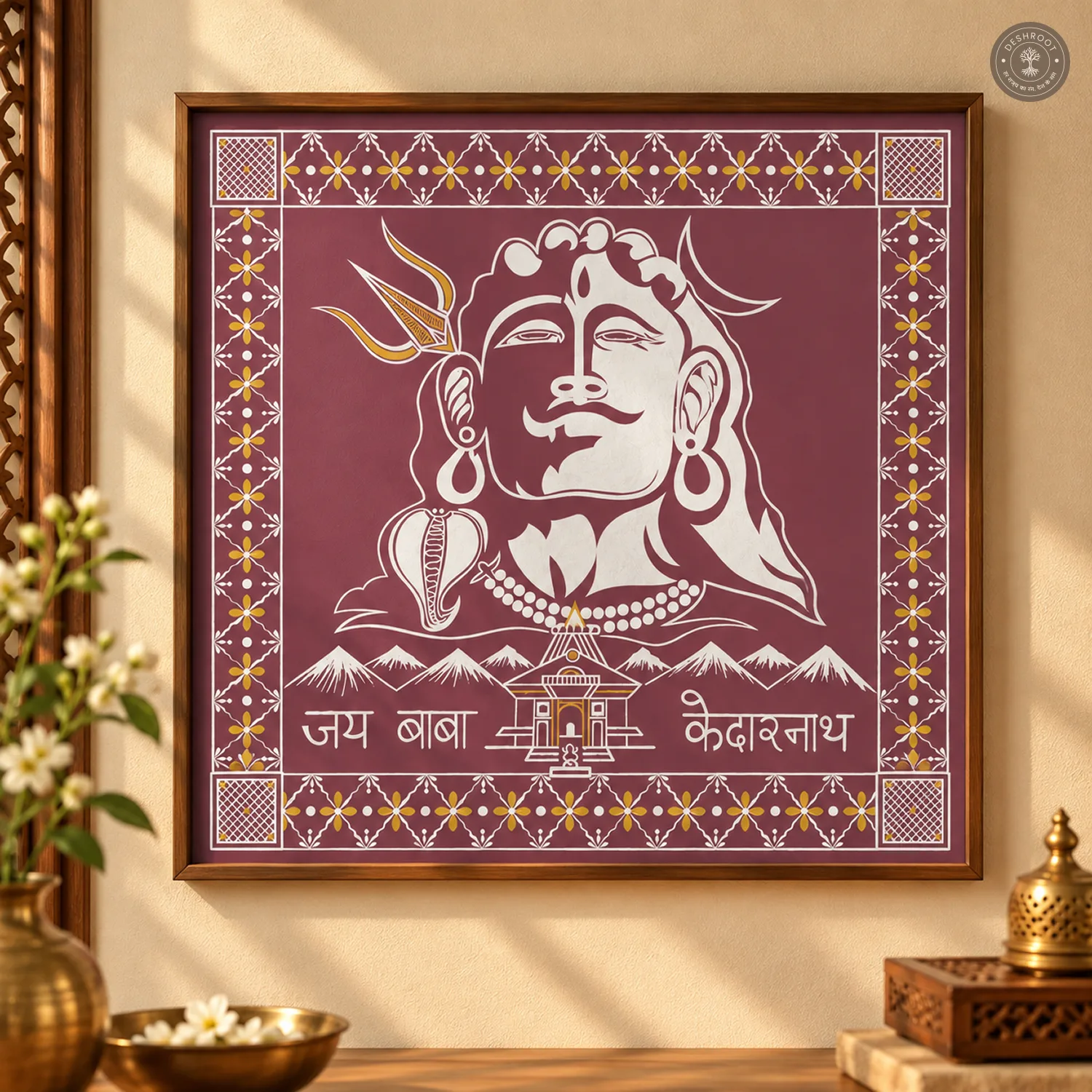
Aipanart Baba Kedarnath Temple is made in the traditional folk art method of Uttarakhand. A paste of cow dung and cow urine is first applied to the cotton cloth, and ochre clay is then spread over it. The design is finished with handmade colors such as turmeric, indigo powder, and vermilion. On the brown ochre cloth, the Kedarnath Temple is drawn in fine white line work, with touches of yellow and blue on the roof and doorway. A bull sits in front of the temple, snow-capped mountains rise behind it, and “Jai Baba Kedarnath” is written at the top. A border of flower motifs frames the piece.
The cloth measures 20 x 20 inches, with an 18 x 18 inch Aipan area.
The Meaning of the Materials
- Cow urine: The scriptures treat cow urine as very important. It is used to remove negative energy and Vastu defects, and to clear obstacles in auspicious work.
- Cow dung: According to Vastu Shastra, cow dung is considered very sacred and effective. It is believed to remove negative energies from the home and keep positive energy flowing.
- Ochre clay: It is used for ritual purposes, and for painting religious idols and structures.
- Rice: Akshat means “unbroken”, so it also stands for focus. Using rice in worship is considered very auspicious, and it is regarded as the most precious of grains. Akshat symbolizes purity and completeness, and no worship of any deity is considered complete without it. Rice is seen as the purest grain because it stays protected inside the husk, out of reach of animals and birds. It is used in worship to draw power, prosperity, and peace, and many remedies involve rice. Goddess Lakshmi and Goddess Annapurna are said to be pleased by it.
Materials and Colors Used
- Base: Cotton cloth
- Surface: Cow urine, cow dung, and ochre soil
- White: Ground rice flakes
- Yellow: Turmeric
- Blue: Indigo powder
- Orange: Sindoor (chola)
Aipanart is a platform that showcases the traditional Aipan art of India and works to preserve this cultural heritage. Each design is crafted to support local artisans, encourage cultural exchange, and inspire a new generation to value the beauty and meaning of this ancient art form.
The cow’s life is the light of the earth. Save Cow, Save Culture, Save Nature.
|